
Love as Practice: Beyond the \Feelings of Valentine's Day
Valentine's Day invites us to celebrate love with cards, flowers, and chocolates—gestures that honor the warm feelings we have for the people we care about. Feelings are an important aspect of love, but love is so much more than that. What sustains love through ordinary days, difficult seasons, and genuine hardship?
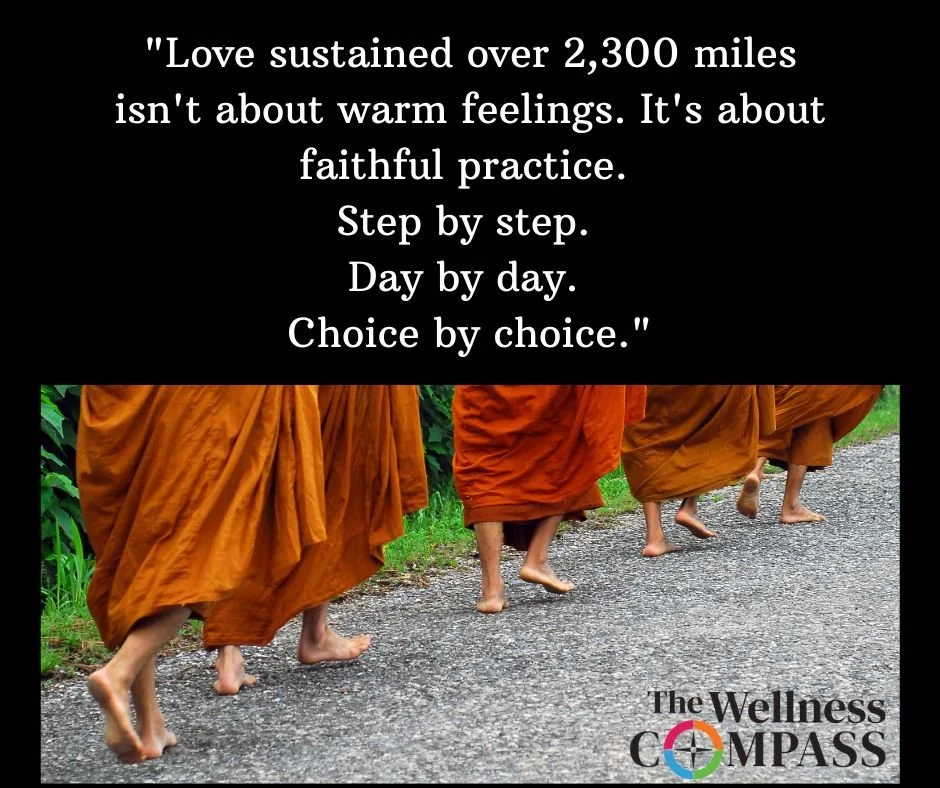
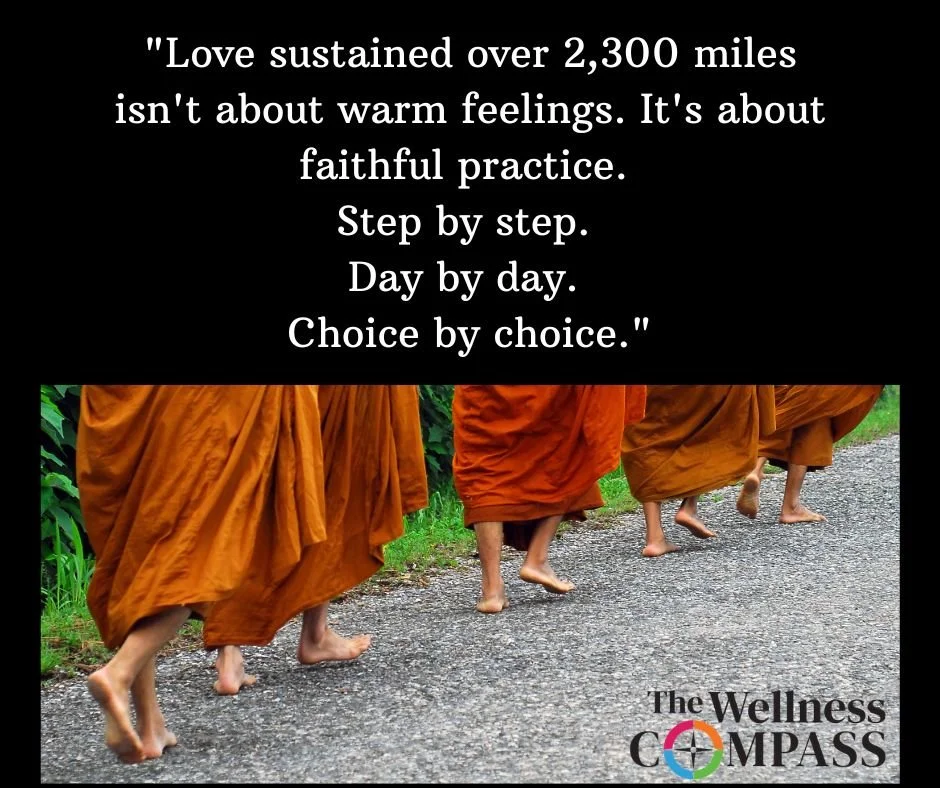
This week, nineteen Buddhist monks completed a 2,300-mile walk from Texas to Washington, D.C., covering over twenty miles each day for 108 days. Some walked barefoot. Some nights they slept in tents in the midst of freezing weather. Early in their journey, their escort vehicle was struck by a distracted driver, and one monk lost his leg. Rather than responding with anger or litigation, the monks offered compassion and continued their pilgrimage.
Their journey teaches us something essential: love is not primarily a feeling. Love is an embodied practice—a decision we make again and again through our actions.
American scholar and author bell hooks wrote that, "Love is an act of will—namely, both an intention and an action." She insisted that love requires care, commitment, knowledge, responsibility, respect, and trust. These aren't emotions that wash over us. They're disciplines we can choose to cultivate, day after difficult day.
This understanding has for centuries appeared across wisdom traditions as well. In the Bible, for example, in 1 Corinthians 13, love is described not as a feeling but as a series of actions: love is patient, love is kind, love does not keep a record of wrongs. These are choices, not sentiments. They require intention and practice.
The monks' walk demonstrates this truth beautifully. When faced with injury and loss, they couldn’t rely solely on positive feelings to carry them forward. They instead relied on their commitment to peace—a commitment expressed through every mindful step, every tent pitched in the cold, every encounter with strangers along the highway.
Their example has profound implications for our relationships. When we understand love as practice rather than feeling, we stop waiting for the emotion to show up before we act lovingly. We show up for our partner even when we're frustrated. We offer kindness to our children even when we're exhausted. We extend compassion to ourselves even when we feel unworthy of it.
Love as practice means recognizing that the small, unglamorous choices matter most: listening when we'd rather talk, pausing before reacting, choosing forgiveness over resentment, showing up consistently rather than dramatically. These daily disciplines build the foundation that feelings alone cannot sustain.
So this Valentine's Day, by all means celebrate with flowers and chocolates. But also ask yourself: What loving actions will I practice even when the warm, affectionate feelings aren't always there? How will I embody love even when it costs me something? What am I willing to walk twenty miles a day for?
The monks teach us that love sustained over 2,300 miles isn't about warm feelings. It's about faithful practice. Step by step. Day by day. Choice by choice.
That's the love that endures.
If you want to hear more about our thoughts on this topic, listen to this week’s 10-12 minute episode of the Wellness Compass Podcast, which you can find by clicking on “Podcast” at the top of this page. In this week’s episode you will learn about a unique new way you can interact with the Wellness Compass Podcast that includes recording an audio message that might appear on a future episode.
Speaking of podcasts, Scott has his own podcast, which is just him speaking about a topic that he is passionate about: the integration of spirituality and wellness. The Living Compass Podcast can be found HERE or in your favorite podcast app.


