(Click on the player at the top to listen to this ten-minute episode)
What follows is the weekly column we email every Friday that is a companion to this weekly podcast. This podcast episode expands on the content of the column. You can subscribe to the weekly column HERE.
The Power of Enough: Finding Contentment in a Culture of More
We live in a culture that constantly tells us that we need more, especially as we approach the holidays. More success, more possessions, more activities, more social media likes, more achievements, more of everything. We don't know about you, but the constant striving leaves us exhausted, anxious, and spiritually depleted. There is another choice, though. We can embrace a different mindset, one we call the power of "enough." Here are four thoughts on what the power of "enough" looks like and how we can embrace it.
How the mindset of "never enough" negatively impacts our mental health. The psychology of scarcity can have a significant impact on our well-being. We end up feeling like we never have enough or that we never are enough. We also start to believe that everyone else seems to have "enough," or at least more than what we have. It's so easy to find ourselves on the treadmill of never enough that we don't even realize that we are on it.
We are all familiar with the story of the half a glass of water and the question of whether it is half full or half empty. A third option is that the glass is twice as big as it needs to be. In this metaphor, the glass represents our desires to have more. Once we learn to scale down the size of our desires, we will experience more fullness with what we already have.
Chasing after external validation ultimately leaves us feeling empty. Wisdom teachers across traditions remind us that we're already complete, already beloved, already whole. When we chase external validation to fill an internal void, we're looking in the wrong direction. All religions teach that a life of meaning and happiness isn't based on an abundance of possessions and offer invitations to recognize the fullness already present in this moment and in what we already have.
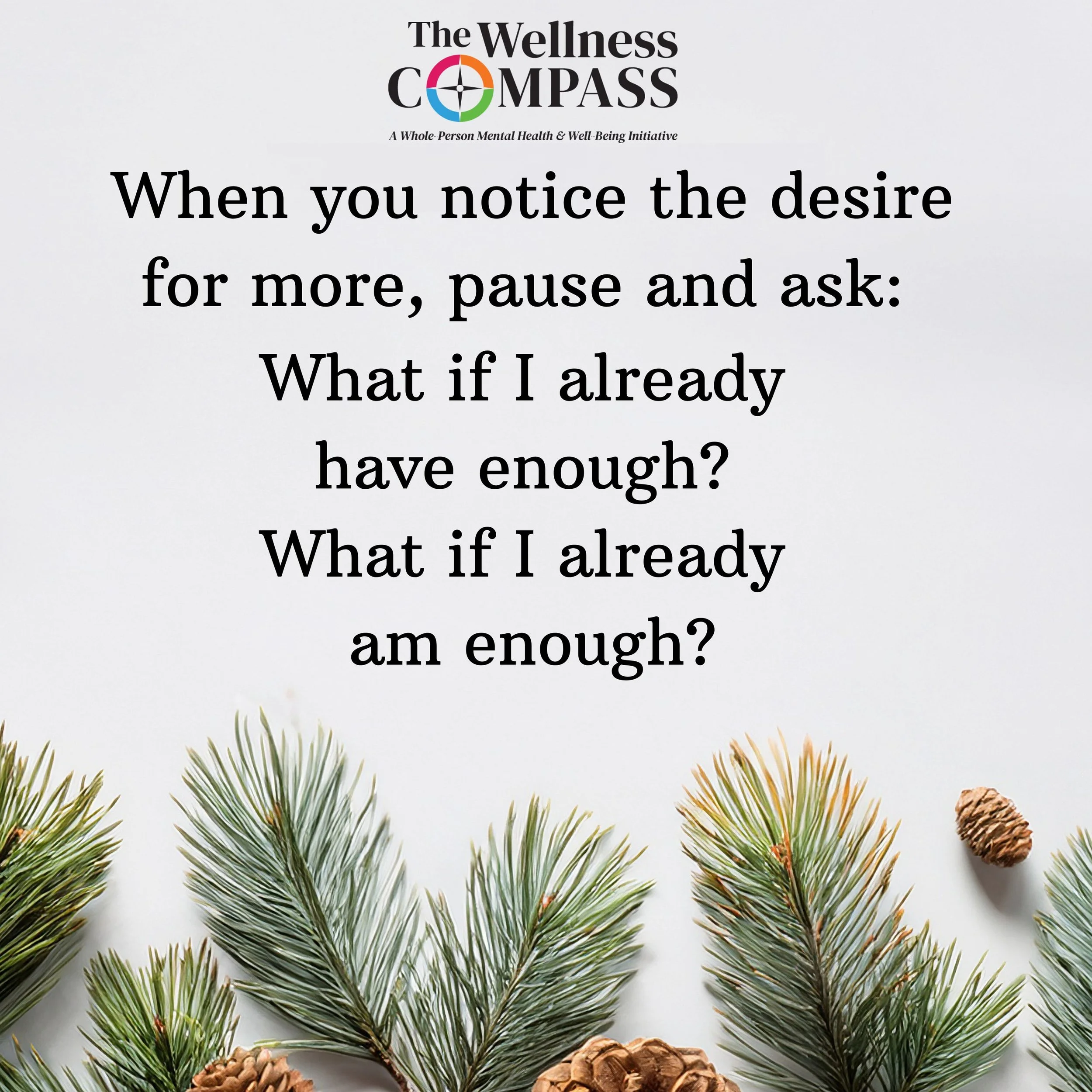
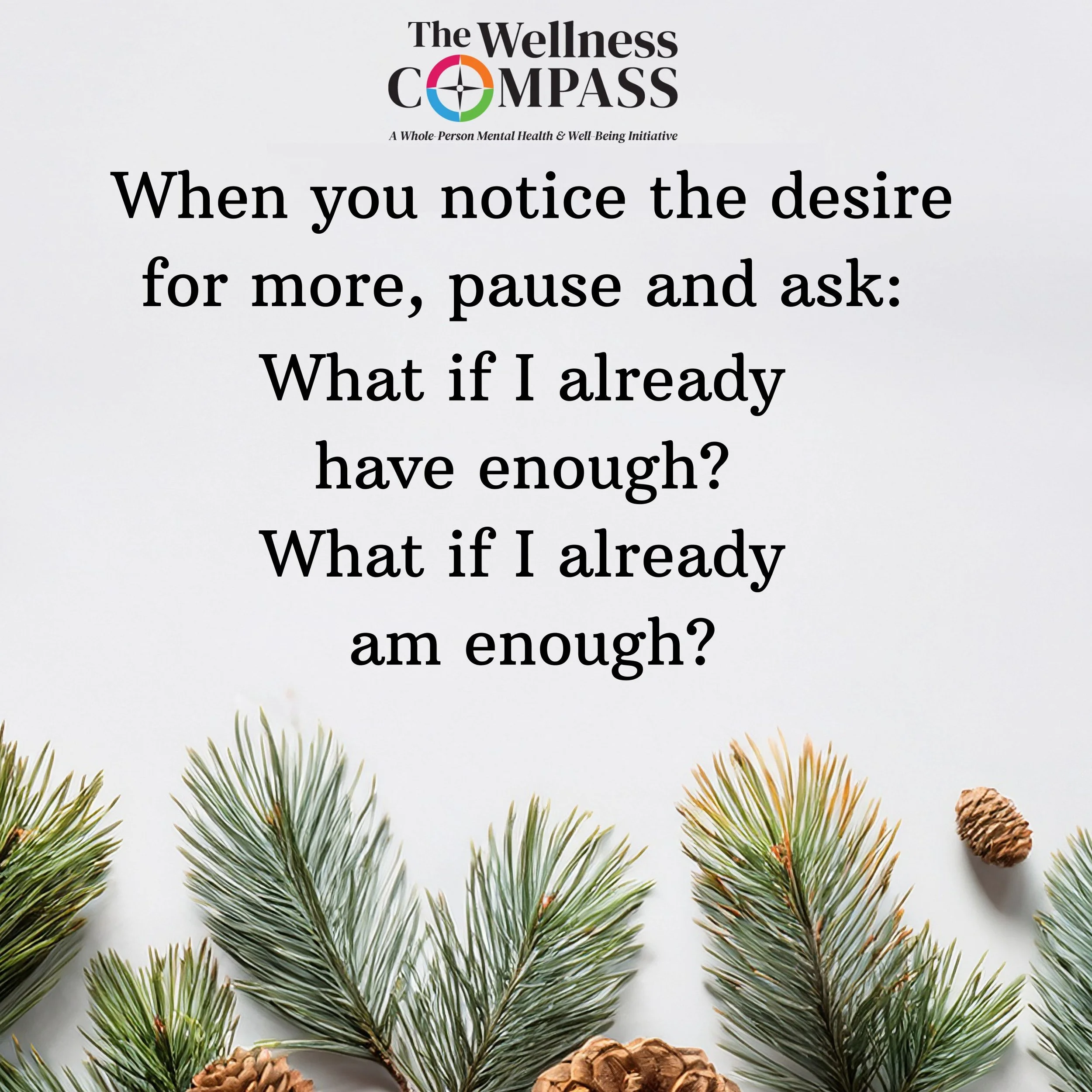
There are things we can do each day to cultivate the belief that we already have enough. Here are a few ideas. Begin and/or end each day with a simple moment of gratitude. Pause and be thankful. Sit quietly and notice what's already here: your breath, a roof over your head, the beauty of nature, and the kindness of others. When you notice the desire for "more" arising, pause and ask: "What if I already have enough? What if I already am enough?"
Living from abundance rather than scarcity is a choice we need to make continuously. When we're not desperately grasping for more, we can live from genuine appreciation rather than anxious striving. We can give more generously, rest more deeply, and love more freely.
The power of "enough" isn't about having less—it's about being more present, more peaceful, and more content.
Making It Personal:
Does the holiday season create stress around not having enough or feeling not enough? Reflect on specific areas—work, relationships, possessions, achievements—where you feel the pull of "more." What does this striving cost you emotionally and spiritually?
What would change in your daily life if you truly believed, "I am enough," and "I have enough"?
When have you experienced a moment of genuine contentment—a time when you felt delighted with what was present? What conditions made that possible? How might you cultivate more of those conditions in your life, especially during this holiday season?
And please remember to subscribe to this podcast to get updates regarding new episodes. We would also appreciate you reviews and ratings in your app, as well as helping us to grow this nonprofit podcast by sharing it with others. Thank you!
There is a weekly Wellness Compass Column that is emailed each Friday morning that corresponds with this podcast. You can sign up to receive this free weekly email at www.WellnessCompass.org
Sign up for Your Weekly Wellness Compass to receive weekly an email each week that announces when a new podcast episode has been released and also includes a transcription of the episode for those who prefer to read instead of listen. Each episode is designed to help you for navigate your week ahead with clear attention and intention.
ABOUT THE CREATORS:
Holly Hughes Stoner, LMFT and Scott Stoner, LMFT, are both licensed marriage and family therapists who are partners in life and in work. They are the Co-Directors and Co-Creators of the Wellness Compass Initiative, a non-profit initiative that crates preventative wellness materials for adults, families, and teens. They live in Madison, Wisconsin and are the parents of three adult children and are blessed with two grandchildren, as well.


